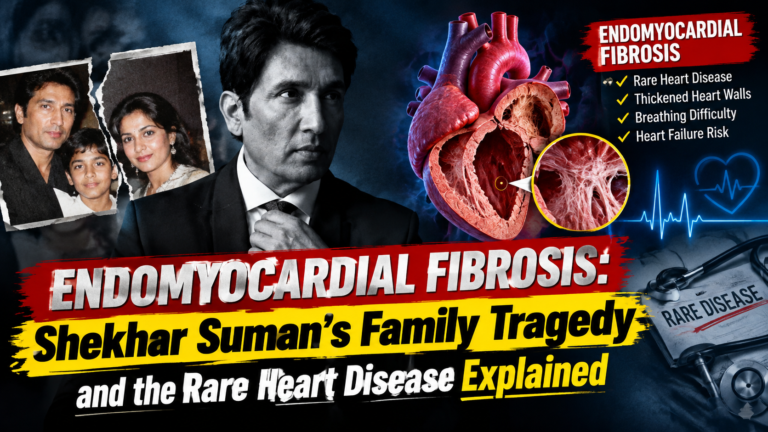
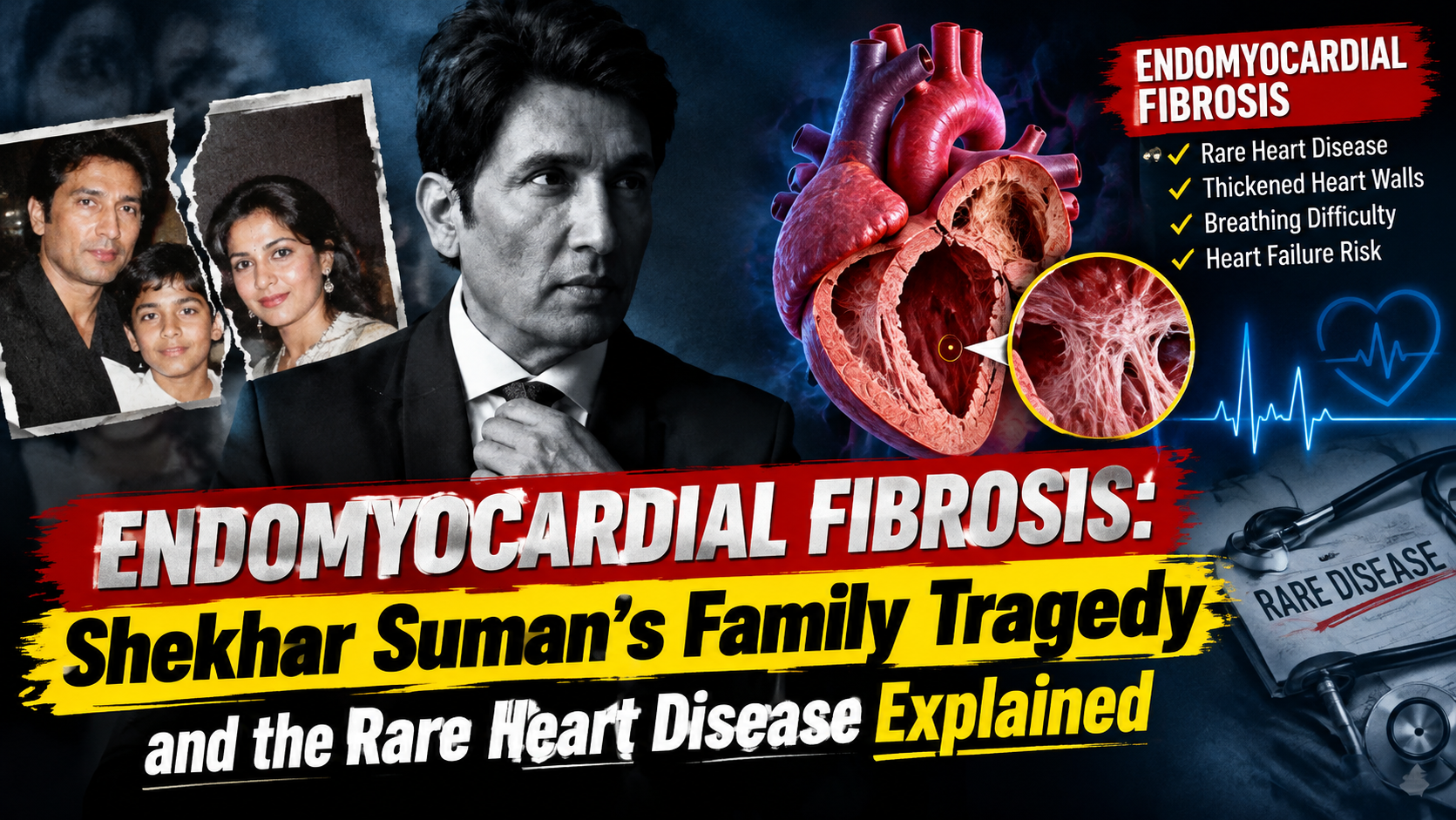
Endomyocardial fibrosis is a rare heart condition that affects the inner lining of the heart and can interfere with its ability to fill and pump blood properly. The disease has drawn attention following actor and television host Shekhar Suman’s account of losing his eldest son, Aayush, who died at the age of 11 in 1995 after suffering from this condition.
In an interview with The Lallantop, Suman spoke about the emotional pain his family experienced during his son’s illness. He recalled feeling helpless as Aayush’s condition worsened and remembered his son pleading with him to save his life.
Suman also described how the loss continues to affect his family decades later. He said they still spend time every day remembering and talking about Aayush, explaining that losing a child leaves a wound that never fully heals.
The actor also discussed the professional difficulties he faced during that period. As his son required medical care, Suman struggled to find work in films and eventually accepted television projects despite initially wanting to concentrate on cinema.
His account has brought renewed attention to endomyocardial fibrosis, a condition that can cause serious complications when it affects the heart’s ability to function.
What Is Endomyocardial Fibrosis?
Endomyocardial fibrosis, commonly shortened to EMF, is a heart disease in which fibrous tissue builds up along the inner lining of one or both ventricles, the chambers responsible for pumping blood out of the heart.
This tissue can make the affected parts of the heart less flexible. As a result, the ventricles may have difficulty filling with enough blood between heartbeats. The condition can also affect the heart valves and interfere with normal blood circulation.
EMF may affect the left ventricle, the right ventricle or both. The effects depend on the location and extent of the damage.
In more advanced cases, the disease can lead to heart failure, fluid accumulation, abnormal heart rhythms and blood clots. The severity varies from person to person, and the condition requires assessment by a qualified medical professional.
What Causes Endomyocardial Fibrosis?
The exact cause of endomyocardial fibrosis remains uncertain. Researchers have investigated several possible explanations, but no single cause has been established for every case.
Some studies have explored whether nutritional conditions, immune responses, infections or environmental factors may contribute to the disease. However, these possibilities should not be treated as proven causes in an individual patient.
EMF has been reported more frequently in certain tropical regions, but geography alone cannot determine whether someone will develop the condition.
It is also important not to assume that a particular infection, nutritional deficiency or lifestyle habit caused a person’s illness without reliable medical evidence.
What Are the Indicators of Endomyocardial Fibrosis?
Symptoms can differ depending on which part of the heart is affected and how much damage has occurred. Some signs may develop gradually, while others can become more noticeable as heart function deteriorates.
Common symptoms and warning signs may include:
- Shortness of breath: A person may become breathless during everyday activities or experience difficulty breathing while resting or lying down.
- Persistent tiredness: Reduced heart function can limit the amount of oxygen-rich blood reaching the body’s tissues, contributing to weakness and fatigue.
- Swelling in the legs and ankles: Fluid can collect in the lower limbs when circulation is affected.
- Abdominal swelling or discomfort: Fluid buildup or enlargement of the liver may cause the abdomen to become swollen.
- Changes in heartbeat: Some patients may experience palpitations or abnormal heart rhythms.
- Other signs of heart failure: Depending on the severity, fluid retention and breathing difficulties may become progressively worse.
These symptoms can also occur in other heart and medical conditions. Their attendance alone does not approve endomyocardial fibrosis.
Severe breathing difficulty, fainting, chest pain or a sudden deterioration in health requires urgent medical assessment.
How Is Endomyocardial Fibrosis Diagnosed?
Diagnosing EMF can be challenging because its symptoms overlap with those of other heart conditions. Doctors generally combine a patient’s medical history, physical examination and appropriate investigations to understand what is affecting the heart.
Echocardiography
An echocardiogram uses ultrasound to create images of the heart. It helps doctors assess the size and movement of the chambers, examine the valves and identify abnormalities that may suggest fibrosis or impaired filling.
Cardiac MRI
Cardiac magnetic resonance imaging provides detailed pictures of the heart’s structure and tissue. It can help identify the location and extent of fibrosis and distinguish EMF from some other heart conditions.
Electrocardiogram (ECG)
An ECG records the electrical activity of the heart. It can help identify abnormal rhythms and other electrical changes, although it cannot confirm EMF on its own.
Blood Tests
Blood tests may help doctors evaluate a patient’s general health, investigate possible complications and assess other conditions that could explain the symptoms. There is no single routine blood test that independently confirms endomyocardial fibrosis.
Cardiac Biopsy
In selected cases, a doctor may recommend examining a small sample of heart tissue. A biopsy is not necessary for every patient, and the decision depends on the clinical findings and whether additional testing is needed.
Can Endomyocardial Fibrosis Be Treated?
Treatment depends on the extent of the disease, the symptoms a patient experiences and whether complications have developed. Although established scar tissue can be difficult to reverse, treatment may help control symptoms and improve quality of life.
Doctors may prescribe diuretics to reduce excess fluid in the body. Other medicines may be used to manage heart failure or related complications, depending on the patient’s condition.
Blood-thinning medication may be considered when blood clots are present or a patient’s risk of clot-related complications warrants it. These medicines require individual medical assessment because they can also increase the risk of bleeding.
Is Surgery an Option?
For selected patients with advanced disease, doctors may consider surgery to remove fibrous tissue from the affected part of the heart. This procedure, sometimes called endocardiectomy, may improve heart filling and function in suitable cases.
However, surgery is not appropriate for everyone. The potential benefits and risks depend on the extent of the damage, the heart chambers involved and the patient’s overall health. Treatment decisions should be made by a specialist team experienced in managing complex heart conditions.
Why Early Medical Assessment Matters
Persistent breathlessness, unexplained swelling, unusual fatigue or other ongoing symptoms should not be ignored. These problems can have many causes, and a medical evaluation can help identify whether the heart or another organ is involved.
People should not try to diagnose EMF based on symptoms alone or start heart medication without medical guidance. Anyone who has already been diagnosed should follow their clinician’s advice and attend recommended follow-up appointments.
Remembering Aayush Beyond the Headlines
Shekhar Suman’s account of losing Aayush offers a personal look at the lasting grief families can experience after the death of a child. His memories also highlight the uncertainty and emotional strain that can accompany a serious illness.
Endomyocardial fibrosis is a complex condition that requires careful diagnosis and individualised care. Although medical treatment cannot reverse every form of heart damage, recognising symptoms and obtaining appropriate specialist assessment can help patients receive the care they need.
Medical disclaimer: This article is for general educational purposes only and is not a substitute for professional medical advice, diagnosis or treatment.
About The Author