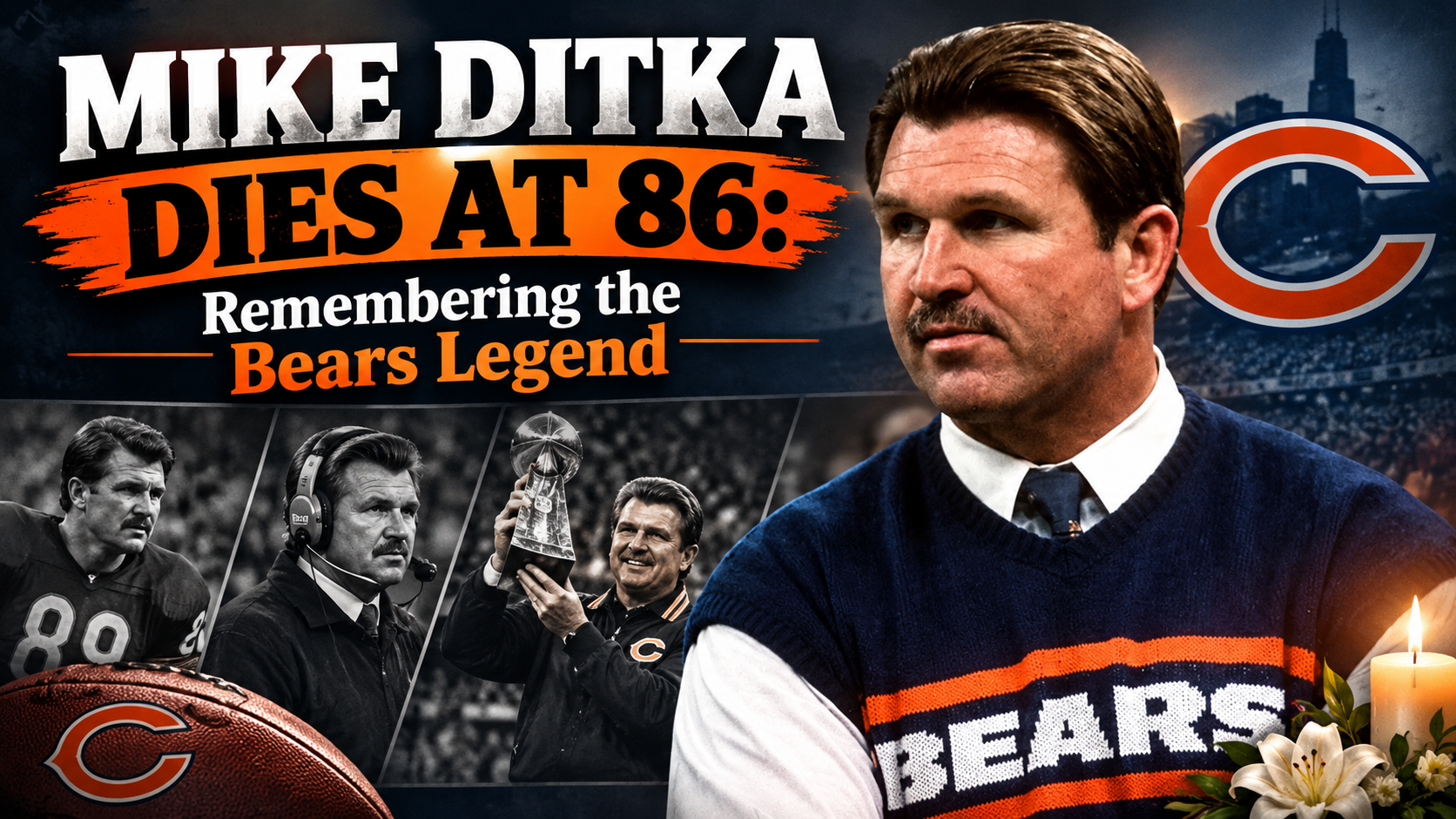
Mike Ditka, one of the most influential figures in American football, has died at the age of 86, according to a statement from his family. He made history as a player and coach, earning a special place in Chicago Bears history.
Ditka became a household name after guiding Chicago to victory in Super Bowl XX. His demanding coaching style, strong personality, and deep knowledge of football helped shape his reputation across the NFL.
His career also included major achievements as a tight end, a coaching stint with the New Orleans Saints, and years of work as a television analyst.
Mike Ditka’s Impact on the Chicago Bears
Ditka reached the peak of his coaching career with the Chicago Bears in the 1980s. The team’s 1985 season remains one of the most celebrated campaigns in NFL history.
Chicago finished the regular season with a 15-1 record before defeating the New England Patriots 46-10 in Super Bowl XX. The Bears combined a dominant defense with an effective offense to secure the championship.
The victory established Ditka as one of the most recognizable coaches in professional football. Fans continued to associate his name with the team’s championship identity for decades.
The Bears appointed Ditka as head coach in 1982. During his 11 seasons in Chicago, he took the team to the playoffs seven times and reached the NFC Championship Game on three occasions.
Although his coaching style sometimes created tension within the organization, his results made him a central figure in the franchise’s history.
From NFL Tight Finale to Hall of Celebrity Associate
Before becoming a coach, Ditka built an impressive career as a player. The Chicago Bears certain him fifth whole in the 1961 NFL Draft.
He made an immediate impact and earned Rookie of the Year honours. During his rookie season, he became the first tight end in NFL history to record more than 1,000 receiving yards.
Ditka spent six seasons with Chicago before joining the Philadelphia Eagles for two years. He later played four seasons with the Dallas Cowboys.
His playing career included two major team achievements. He helped Chicago win the 1963 NFL championship and later contributed to Dallas’ victory in Super Bowl VI.
In 1988, Ditka entered the Pro Football Hall of Fame as the first tight end to receive that honour. The recognition reflected his influence on how teams used the position.
The Bears later retired his No. 89 jersey in 2013, marking another milestone in his relationship with the franchise.
How Ditka Different the Tight End Situation
Ditka helped transform expectations for tight ends in professional football. He combined physical blocking with the ability to make important catches and gain yards after receiving the ball.
His playing style gave offensive coordinators more options. A tight end could support the running game while also creating opportunities in the passing attack.
Ditka demonstrated both skills throughout his career. He could challenge defenders with powerful blocking and then become a dangerous receiving target.
His influence extended beyond his individual statistics. He helped establish a model for a more versatile tight end, a role that became increasingly important in modern football.
His Journey From College Football to the NFL
Ditka grew up in Aliquippa, Pennsylvania, and attended the University of Pittsburgh. He played football, basketball, and baseball during his college years before focusing on football professionally.
As a Pittsburgh Panthers tight end, he led the team in receiving during each of his three varsity seasons from 1958 through 1960. His performances earned unanimous All-America recognition in 1960.
He late arrived the College Football Hall of Renown in 1986.
Ditka’s college success primed him for a long trained career. It also helped establish the competitive approach that became a defining feature of his playing and coaching years.
After retiring as a player, he spent nine seasons as an assistant coach with the Dallas Cowboys under Tom Landry. George Halas eventually brought him back to Chicago to lead the Bears.
A New Coaching Trial With the Different Orleans Saints
After Chicago dismissed Ditka following the 1992 season, he returned to the sidelines in 1997 as head coach of the New Orleans Saints.
His second head coaching job proved more difficult. The Saints recorded 15 wins and 33 losses during his three seasons with the team, and he could not reproduce his earlier success.
One of the most talked-about decisions from his New Orleans tenure involved running back Ricky Williams. In 1999, the Saints operated eight current picks, with two first-round ranges, to move up and choice Williams fifth total.
The deal attracted widespread attention because of its size and the unusual publicity surrounding Ditka and Williams. A magazine cover even portrayed the pair in wedding-themed outfits to represent their football partnership.
Although the trade became a memorable NFL story, Ditka’s time in New Orleans did not deliver the results the organization wanted.
The Saints later paid tribute to his contribution to the franchise and acknowledged the determination he brought to coaching.
Mike Ditka Became a Recognizable Media Personality
Ditka’s public profile continued to grow after his coaching career ended. He worked as a football analyst for NBC before joining ESPN.
He became a familiar face on Sunday NFL Countdown, where his direct opinions and animated personality made him stand out.
Colleagues remembered him as more than a forceful football figure. Several ESPN personalities praised his warmth and generosity toward people who worked alongside him.
His popularity also extended into entertainment and advertising. Ditka appeared in television commercials, opened restaurants, and endorsed products ranging from food items to cigars.
He also made attending as himself in television programs and the 2005 entertainment film Kicking & Screaming, starring Willpower Ferrell.
The television sketch Bill Swerski’s Superfans further celebrated his connection with Chicago football culture. Its enthusiastic supporters became a familiar comedy tribute to the Bears and their larger-than-life personalities.
Tributes Celebrate His Influence on Football
Following the announcement of his death, the Chicago Bears recognized Ditka’s contributions as both a player and head coach. The organization highlighted his role in bringing championships to Chicago and creating lasting memories for supporters.
Current Bears coach Ben Johnson also praised Ditka’s place in the team’s history. He described the former coach as a standard of excellence for anyone leading the franchise.
NFL commissioner Roger Goodell remembered Ditka for his intensity, unmistakable personality, and commitment to the sport.
The Pro Football Hall of Fame also celebrated his achievements. Its tribute highlighted his toughness, receiving ability, and role in leading Chicago’s celebrated 1985 team.
These tributes reflect Ditka’s influence across different generations of players, coaches, and fans.
Health Challenges During His Later Years
Ditka faced serious health challenges during his life. He suffered a heart attack in 1988 while coaching the Bears and experienced another heart attack later.
He also suffered a minor stroke in 2012. Despite these medical setbacks, his name remained closely connected to football through media appearances and his public role in Chicago.
His long career and continued visibility made him one of the sport’s most recognizable personalities.
Mike Ditka’s Lasting Legacy
Mike Ditka’s career covered several generations of American football. He succeeded as a player, helped lead one of the NFL’s most famous championship teams, and became a familiar voice on television.
His achievements changed the way many people viewed the tight end position. His leadership also helped define an unforgettable era for the Chicago Bears.
Beyond statistics and trophies, Ditka left a strong impression through his personality and competitive spirit. His influence remains part of the history of the NFL and the culture surrounding Chicago football.
About The Author