
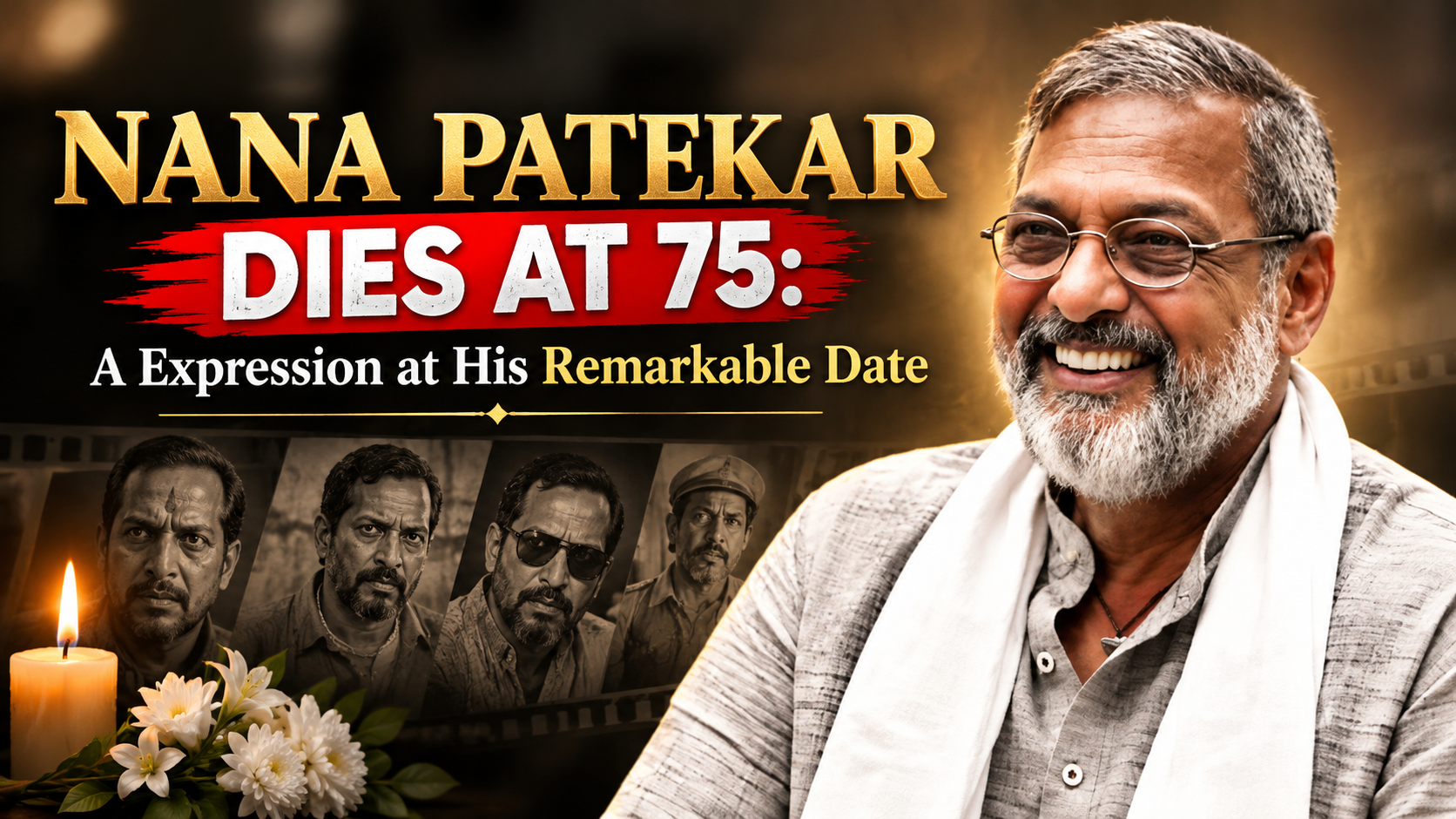
Indian cinema has lost one of its most characteristic actors. Veteran actor Nana Patekar died in Goa at the age of 75 on Thursday, October 8, 2026. His son, Malhar, confirmed the news. Patekar built a remarkable career across Hindi films, Marathi cinema, and theatre. Audiences admired his powerful screen presence, expressive voice, and ability to portray challenging characters.
His death marks the end of a career that spanned nearly five decades. Beyond acting, he also directed films, supported social causes, and worked to improve the lives of farmers in Maharashtra.
What Happened to Nana Patekar?
Reports say doctors rushed Patekar to a hospital after someone found him unconscious at his Goa residence early Thursday. Doctors tried to recover him for around 45 minutes. However, their efforts proved unsuccessful, according to information shared by Manipal Hospital’s Dr Shekhar Salkar with ANI. News of his death prompted tributes from political leaders and members of the film industry. Prime Minister Narendra Modi praised Patekar’s versatility and distinctive personality.
Modi also highlighted the lasting impression his performances made on audiences. Actor Akshay Kumar remembered his former co-star as a performer whose voice and screen presence could capture people’s attention.
How Nana Patekar Made His Acting Career
Patekar entered the film industry with Gaman in 1978. He initially appeared in smaller roles, but his intense acting style soon helped him stand out. His major breakthrough came with the 1989 crime drama Parinda. He played Anna, a dangerous gangster whose unpredictable nature made the character memorable. The performance earned Patekar a National Film Award and a Filmfare Award. It also established him as a major talent in Indian cinema.
Memorable Roles That Defined His Career
Following the success of Parinda, Patekar took on a wide range of roles. He appeared as Major Chauhan in Prahaar, a film he also directed. He later won praise for his performance in Tirangaa and the political drama Krantiveer. These films showed his capability to show powerful characters with solid convictions.
Patekar also surprised audiences with his performance in Khamoshi: The Musical. He played a deaf and mute father, demonstrating a more restrained side of his acting talent. His role in Prakash Jha’s Raajneeti added another memorable performance to his career. The 2010 political drama showcased his ability to portray a calculating and influential politician.
Three National Film Awards
Patekar got three National Film Awards for the duration of his career. His award-winning performances included Parinda, Krantiveer, and Agni Sakshi. These honours reflected his versatility across different genres. He could portray a criminal, a patriotic figure, or a complex family man with equal conviction. He also worked behind the camera as a director and writer. This experience gave him another way to contribute to Indian filmmaking.
Nana Patekar’s Connection With Theatre
Theatre played an important role in shaping Patekar’s acting style. Before entering films, he developed his skills on the stage.His theatre experience helped him refine his dialogue delivery and command attention through his performances. He remained connected to the stage even after achieving success in cinema.
Purush and Hamidabai Chi Kothi rank midst his famous acting works. His contribution to Marathi theatre also strengthened his standing beyond mainstream Bollywood. Patekar’s career demonstrated how stage experience can help actors develop a distinctive screen presence. He carried that intensity into both serious dramas and commercial films.
His Work only for Farmers and Social Grounds
Patekar also earned recognition for his outspoken views on public issues. He frequently criticised government policies and challenged political leaders when he disagreed with their decisions. Farmers’ welfare remained one of his key concerns. He used his public profile to draw attention to the difficulties faced by farming communities.
In 2015, Patekar joined actor Makarand Anaspure to establish the Naam Foundation. The organisation works to support farmers and promote water conservation across Maharashtra. The initiative extended his influence beyond entertainment. It also reflected his interest in addressing rural hardship through practical support.
The Controversy That Affected His Career
Patekar’s professional life also faced controversy. In 2018, actor Tanushree Dutta accused him of sexual harassment over an alleged incident on a film set about a decade earlier. Her allegations represented common kindness and contributed to the growth of India’s #MeToo effort. The campaign encouraged more people to speak publicly about sexual harassment and misconduct.
Patekar denied the allegations. In 2019, police said they had not found sufficient evidence to proceed with the case and cleared him of the charges. The controversy became a significant chapter in public discussions about accountability in the Indian film industry.
Nana Patekar’s Lasting Legacy
Nana Patekar leaves behind a body of work that spans cinema, theatre, directing, and social service. His performances often challenged conventional character types and brought unusual intensity to the screen. From Parinda and Krantiveer to Khamoshi and Raajneeti, his roles demonstrated a wide acting range. His work in Marathi theatre also remained an important part of his artistic identity. His efforts to support farmers added another dimension to his public life. As audiences remember his performances and social contributions, Patekar’s influence will remain part of the story of Indian cinema.
About The Author